
CHARACTERISTICS OF THE GRAIN AND TORTILLA FROM MAIZE NATIVE TO THE TRINITARIA REGION, CHIAPAS, MÉXICO
Article Sidebar
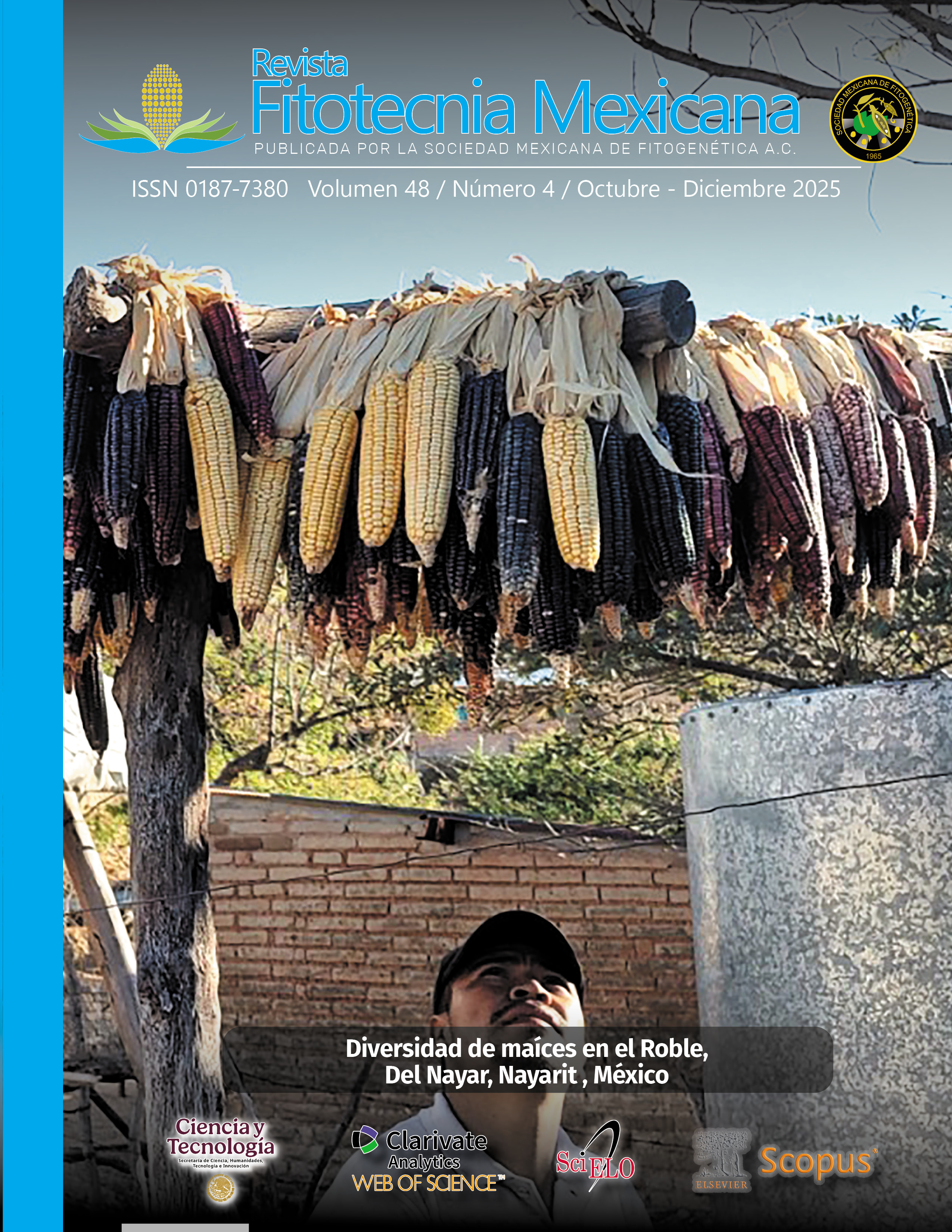
Main Article Content
Abstract
The state of Chiapas, México possesses a large genetic richness of native maize, which is not fully documented, especially in aspects related to its use as food. Grains from nine maize lndraces of the Comiteco race, collected in the Trinitaria region, Chiapas, Mexico were used to determine physical properties of the grain, as weel as characteristics of nixtamalization and tortilla. The 100-seed weight (HSW) varied from 32.9 to 52.2 g. The tes weight (TW) ranged between 75.7 and 80.3 kg hL-1, and the flotation index (FI) values varied from 16 to 44 %, classifying the grains as large-sized with hard to intermediate texture. Nixtamal moisture (NM) showed values between 42.3 and 49.6 %, with most samples below 45 %, while the dough moisture (DM) and tortilla moisture (TM) presented values on average below 58 and 45%, respectively, which are below the minimum required by the dough and tortilla industry. The white color of tortillas was determined by a higher proportion of the parameter L* with values between 72.2 and 78.5, while the yellow color was determined by a higher proportion of parameter b* (36.6-39.9), and the blue color was determined by the negative value -1.1 in parameter a*. Total soluble phenols (TSP) values in tortilla ranged from 673.5 to 1101.7 mg GAE kg DM-1. Characteristics of the grain influenced the variables of nixtamalization and tortilla, as nixtamal presented lower moisture levels than expected in maize intended for the process of making tortillas.
Article Details

This work is licensed under a Creative Commons Attribution-NonCommercial-ShareAlike 4.0 International License.